Achille the indestructible: beyond the myth
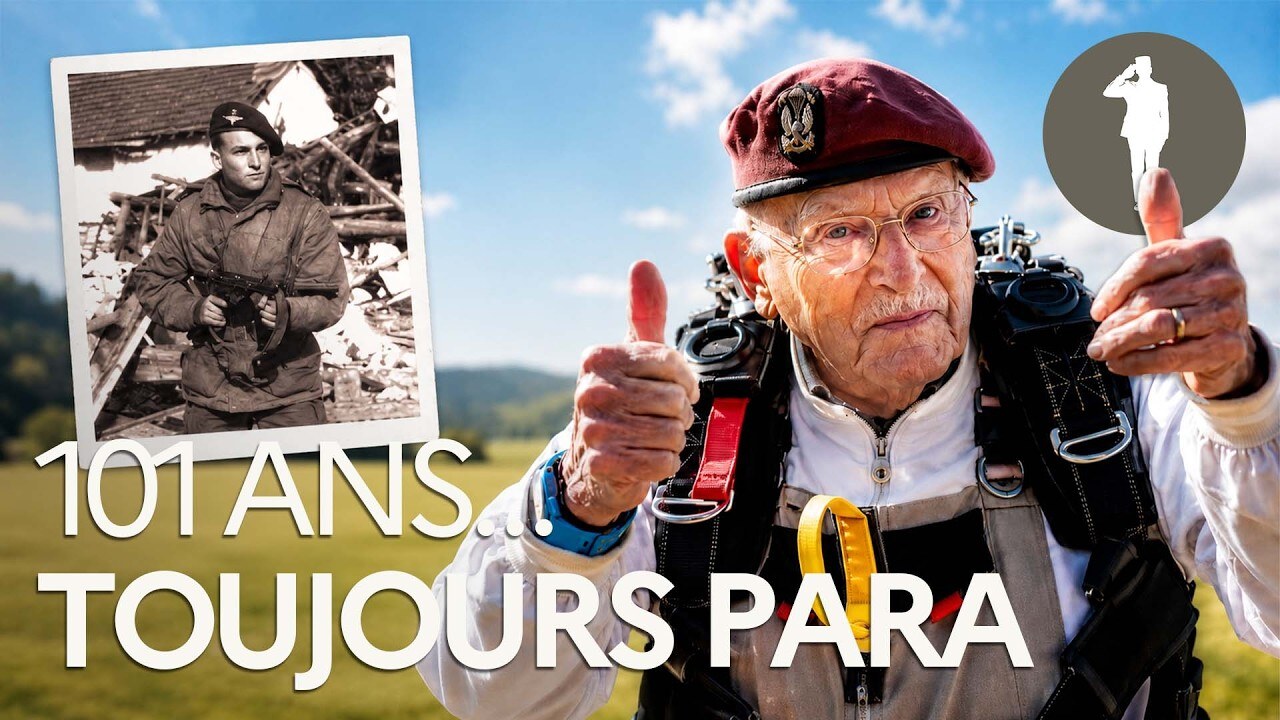
In ancient Greece, Achilles is the greatest of warriors, the one his mother believed she had made invincible. That a French veteran born in the last century should carry that name is worth pausing on. Because where the hero of legend eventually fell, Achille Muller is still standing.
The Greek myth of Achilles
In the Iliad, Achilles is the matchless warrior of the Trojan War. To make him invulnerable, his mother, the goddess Thetis, dipped him as a child into the waters of the Styx, the river of the Underworld. He was protected everywhere but the one spot by which she held him, the heel. That was all it took. From that single point would come his death, beneath the walls of Troy, and the phrase we still use, the famous "Achilles' heel".
It was also beneath those same walls that the first "special operation" in history was born, so the story goes. The Trojan Horse already had the ingredients. A tiny force hidden inside a wooden belly, cunning where ten years of siege had failed, and a decisive impact that ended a war in a single night. Acting small to strike big, three thousand years ahead of its time.
That name is a thread running through history. From the ruse of Troy to the Second World War, which forged the modern special forces, and down to today, a single name links three thousand years of daring. And Achille Muller embodies it on his own.
Achille Muller, the man behind the myth
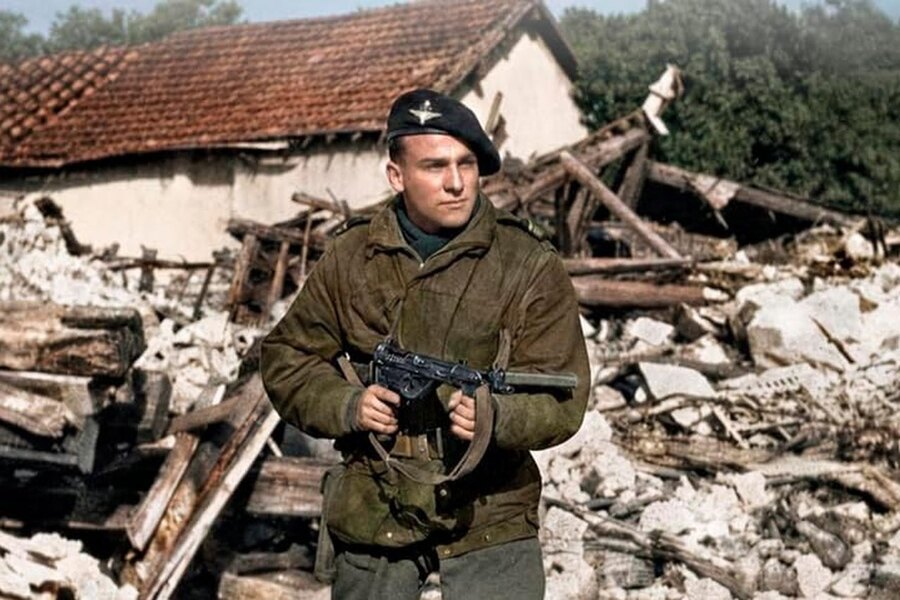
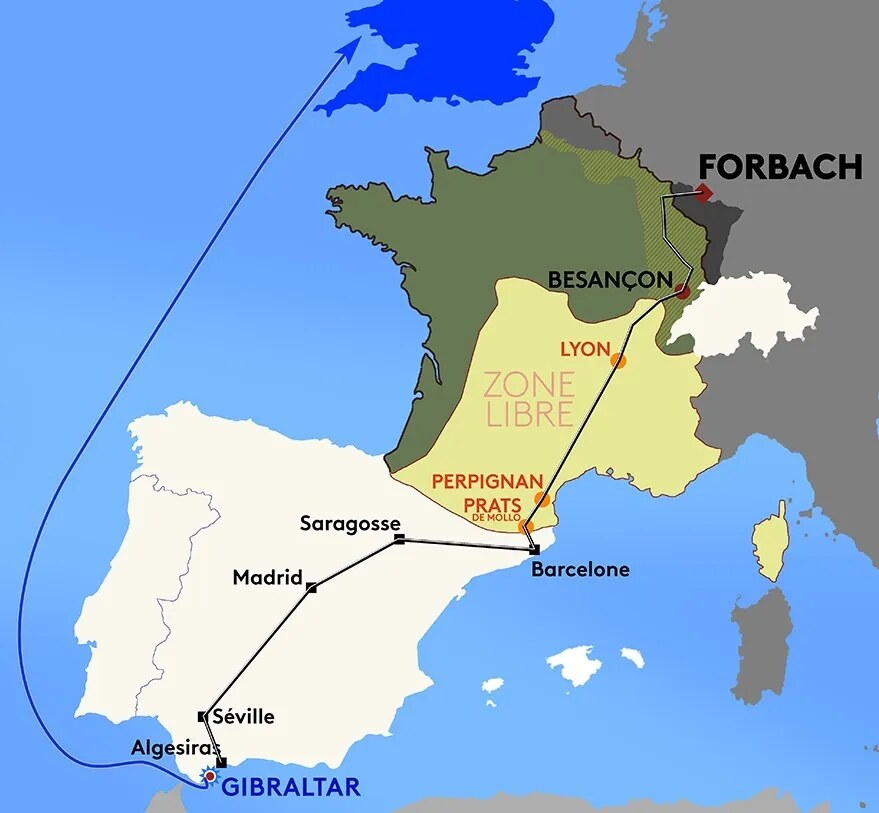
It begins with a poster, in Forbach, announcing that the men of Moselle are to be conscripted into the Wehrmacht. His father, a railwayman, still wore the French uniform; the family still thought of itself as French. He was 17, and he flatly refused. He told his father he would serve in the French army, not the occupier's. On 14 July 1942 he left Forbach by bicycle. To slip across the border, a German guard agreed to look the other way in exchange for butter, impossible to find in Germany. "He is still waiting for his butter," Colonel Muller likes to say today.
What followed was a long flight across Europe. To cross the Doubs he paid for his passage with his brand-new bicycle, and he did not cross alone. A Jewish couple and their two children went with him. In a wood, mud to his ankles, he carried the two little ones, one on his shoulders, the other on his back, to get them across the river. Then came Lyon, the Pyrenees crossed with a small revolver and six bullets to his name, and the length of Spain, from Barcelona to Seville. At Gibraltar, to make himself known to the coastguards, he sent a distress signal in Morse and struck up the Marseillaise. On 10 February 1943 he finally reached Free France and sailed for England.
In London, his escape seemed so improbable that he was suspected of being a German spy, and was questioned for seventy-two days before they believed him. He was then offered fighter-pilot training in the United States, two years, with an officer's rank. He turned it down, so as not to miss the landings. "I'd rather be a private here than a second lieutenant in the United States," he said. Off to Scotland, where he qualified as a paratrooper three times over, then to the battalion of Commandant Bourgoin, the one-armed major, the Franco-British units from which today's French special forces descend.
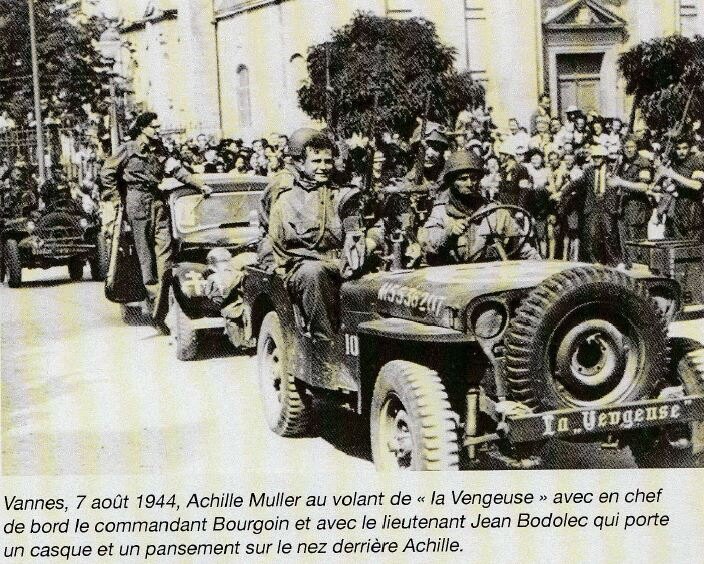
In 1944 he took part in the landings, on the Brittany side. The "cavalry" went in last, by glider. At night, his own slipped between two rows of apple trees. He unloaded his jeep, jumped to the ground and kissed the soil. "I'm kissing the soil of France," he told his startled lieutenant. In early August 1944, his jeep "la Vengeuse" leads the Liberation parade through the streets of Vannes, alongside Commandant Bourgoin, head of the 4th battalion, and Lieutenant Jean Bodolec. The town would later make him an honorary citizen.
With three jeeps, his group once took the surrender of 2,500 Germans; an incredulous American officer told him, "You French, you're all crazy." Indochina and Algeria would follow, then a shower of decorations, including the Resistance Medal and, in 2016, the Grand Cross of the Legion of Honour. Eighty years on, people pile nicknames on him, the indestructible, the last of the Mohicans, the last of the paras, the last Free Frenchman, or "the general's Mohican", coined the day before a parachute jump at 101. In January 2025, for his 100th birthday, he received the gold medal of the City of Pau from François Bayrou.
What it truly means to be "special forces"
When David Stirling created what would become the "special forces", he summed up their spirit in four principles. Not techniques but a way of being. Achille Muller's life illustrates them better than any manual.
"The man is the regiment"
In an elite organisation, economic as much as military, everything rests on the individual, for each man carries, on his own, a part of the whole. Colonel Muller proves it a hundred times over. At 17, alone, he crossed a Europe at war. In a wood by the Doubs, he carried a Jewish couple's two children on his back to get them across the river. One night, later, he came upon two sentries, a resistance fighter and a German, sitting on the ground sharing their rations, and drew from it a conviction he never lost, "All the soldiers in the world are brothers in arms." When people call him "the last", it is that man they salute, one who still keeps a whole generation alive. Achille embodies the regiment on his own, a constant reminder that "special forces" is a term that is always plural, never singular.
"Who dares wins"
It is the motto of the special forces, and probably the truest line for him. At every stage he staked his life with no guarantee at all, and won. By promising butter to a border guard to slip across, by crossing the Pyrenees with nothing but a blanket and six bullets, by turning down an officer's rank in the United States to be there for the landings. He did not wait to be sure of winning before he dared; he won by daring.
"The relentless pursuit of excellence"
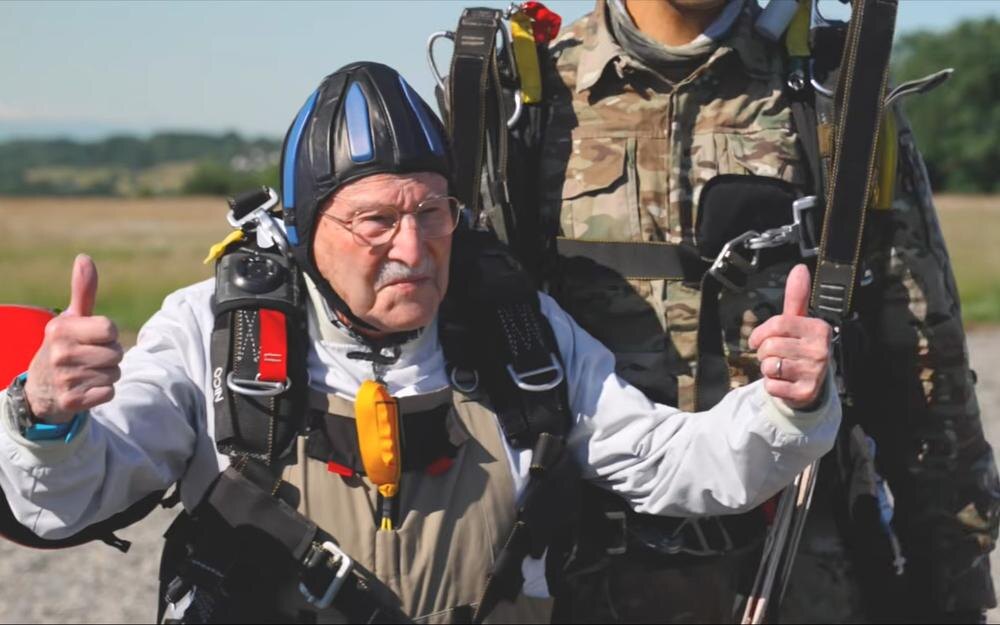
In this line of work, excellence is not an isolated feat, but a standard held over time. As a young man, Colonel Muller pushed it far. Qualified as a paratrooper three times over, he joined the section that tested new parachutes, going so far as to break a world record for exit speed, twenty men dropped in seven and a half seconds. But his real feat comes down to one word, constancy. Eighty years of fidelity to the decision he made at 17. Past the age of 100, he still jumps in free fall and has taken his seat again aboard a combat helicopter. Performance, for him, is measured not by a moment of bravery but by a course never abandoned.
"Humour and humility"
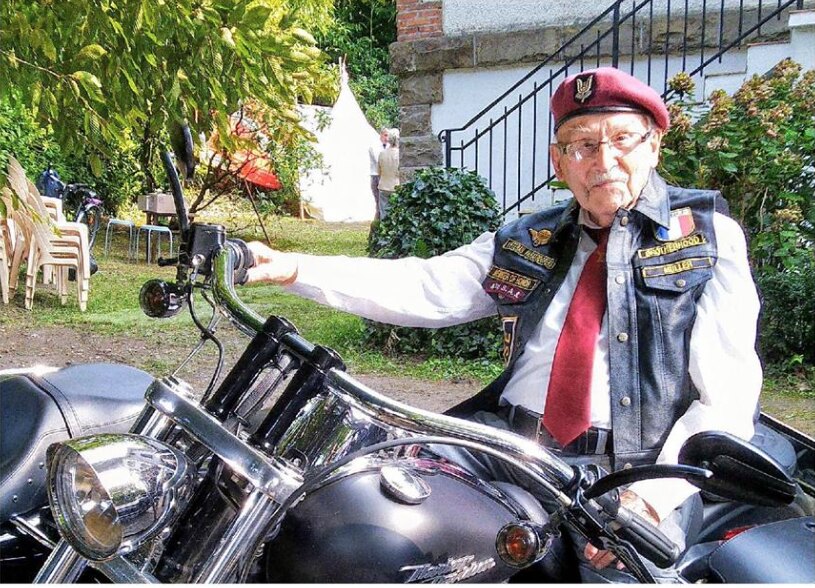
Two qualities define Achille and take people aback, his humour and his humility. Perhaps because he knows how destructive an ego can be within a team. Achille tells his exploits to make people laugh, even the darkest of them, never to make himself larger, and carries his legend without mistaking himself for it. He does not claim the honours, they come to him. And watching this centenarian climb onto his Harley, red beret on his head, you understand that real heroes never need to tell their own story, others do it for them.
A living witness
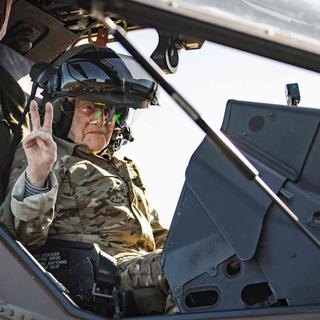
Past the age of 100, Colonel Muller is one of the very last direct witnesses of that time. The day he goes, a living memory will go with him. That is why he keeps passing it on, not least in the schools near Pau, to pupils who are sometimes the age he was in 1942.
Keeping his memory alive is not nostalgia. It is holding up the proof that courage, daring and humility are not textbook words but choices that men made, and that others can still make. As long as his story is told, those values stay alive.
Live the Special Forces method
ARXIBALD trains the special forces of the economy. We run immersive training programmes that transpose to the business world a mindset and methods in leadership, decision-making and resilience, proven where mistakes are not allowed.
Discover our immersive training →