Turn the Ship Around: turning followers into leaders
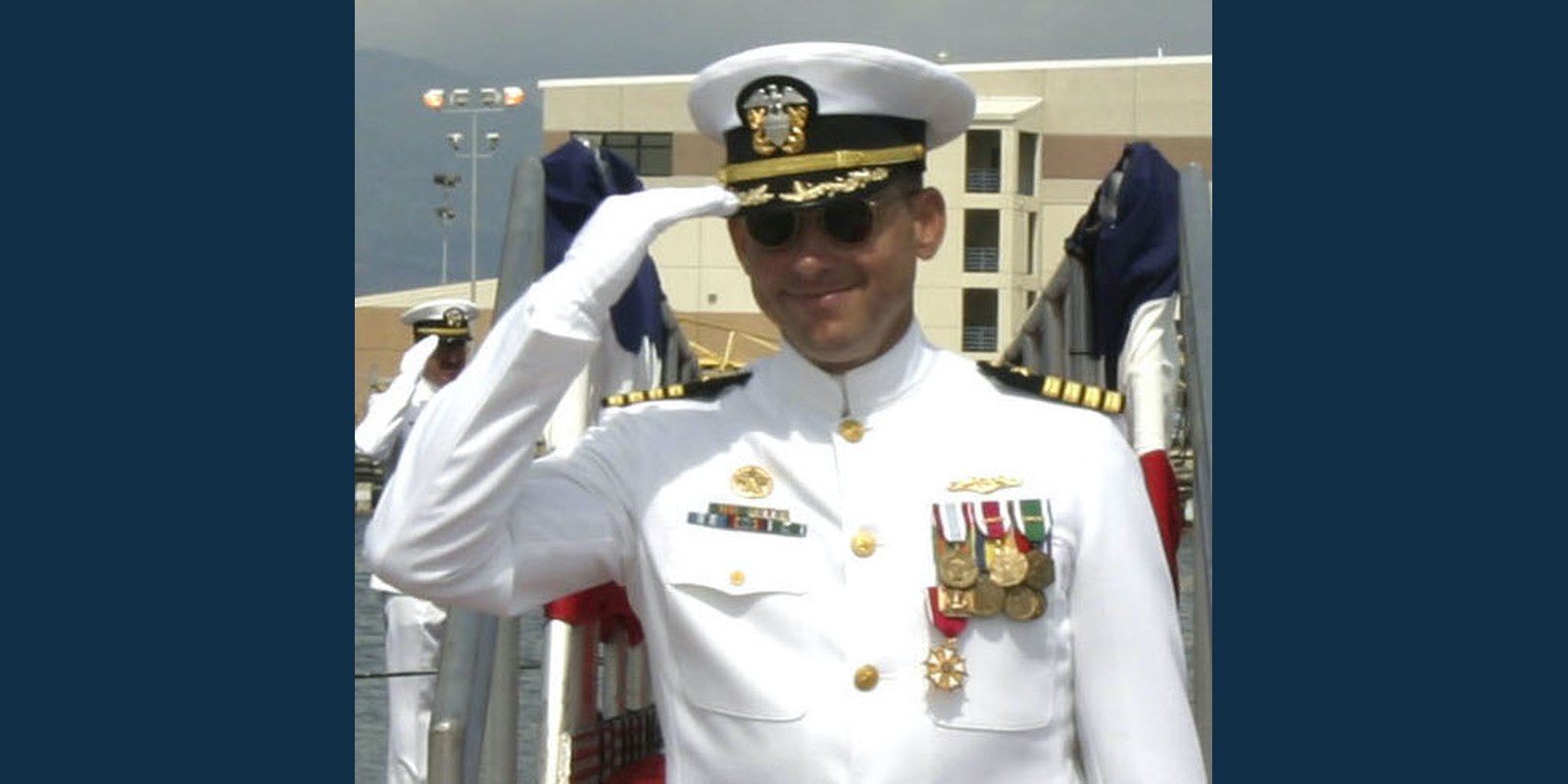
There are management books you forget the moment you close the cover, and others that come down to a single image you can never shake off. Turn the Ship Around!, by David Marquet, is one of the latter: the true story of a nuclear submarine captain who, in a matter of months, turned the worst crew in the US Navy into one of its best. Not by commanding better, but by ceasing to command alone. It is our summer read.
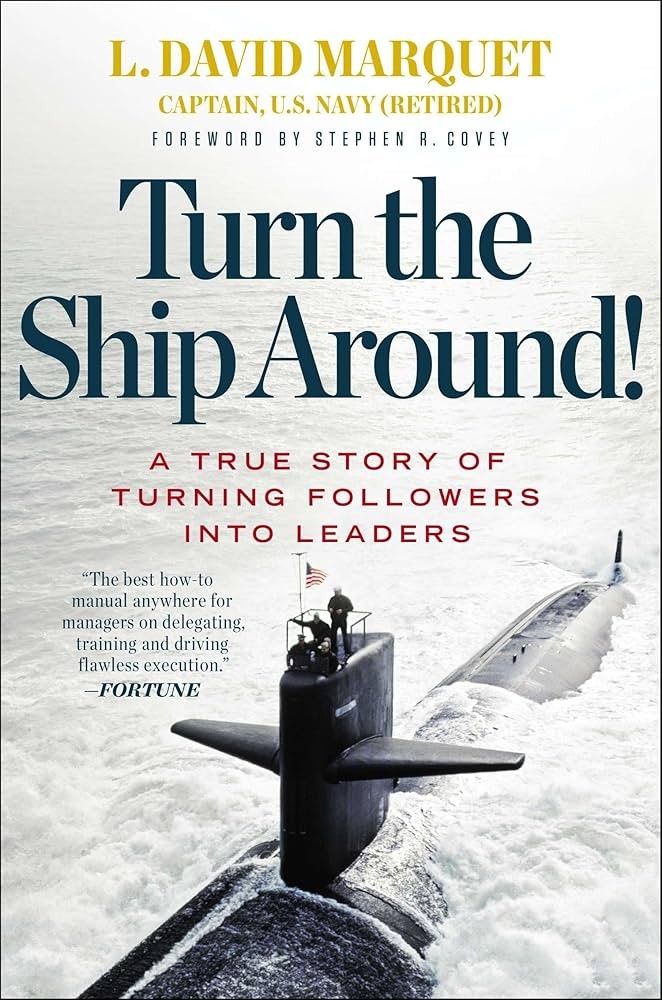
Its subtitle, "A True Story of Turning Followers into Leaders", captures perfectly what we stand for at ARXIBALD. It would be hard to find anything closer to what we believe.
The worst submarine in the fleet
1999. David Marquet, a US Navy officer, has spent a year preparing to command a nuclear submarine. Days before taking command, he is reassigned at short notice to another boat: the USS Santa Fe. A submarine he does not know, with a dreadful reputation, ranked last in the fleet for morale, crew retention and operational results.
Marquet then has an experience that changes everything. Used to knowing everything about his ship, he gives an order that is technically impossible to carry out on this class of boat. The officer of the watch relays it to the crew. A sailor moves to execute it anyway, even though the manoeuvre makes no sense. Marquet grasps in an instant the deadly danger of a crew that obeys without thinking: an organisation where the leader knows everything and everyone else merely executes is never smarter than a single person. And that person always ends up being wrong.
From leader-follower to leader-leader
Most organisations run on a model Marquet calls leader-follower: a few think, decide and give orders; the rest follow. Comfortable, legible, and fragile. It produces teams that wait for the order, shed responsibility, and switch off the moment the leader turns away. Marquet proposes the opposite, the leader-leader model: not a leader who manufactures followers, but a leader who creates other leaders, at every level.
The commander's role is no longer to give the right answers, but to create an environment where everyone is in a position to decide well.
"I intend to..."
The most striking thing about this book is that the theory comes down to a change of language. On the Santa Fe, sailors stop asking permission ("Captain, may I...?") and instead state their intention: "I intend to dive to such a depth", "I intend to change course". The captain now only has to approve, or to question when necessary. Whoever says "I intend to" has already thought, anticipated and taken responsibility for the decision before voicing it. They no longer hide behind the order received: they become an actor.
The special forces practise this same shift with the same economy of means. What you learn at school, in the theory manuals, is to report like this: "I am at such a place, I see such a situation, and I request permission to...". You observe, then you wait. With us, one word changes and everything tips over: "I am, I see, and I propose to...". Whoever proposes has already analysed, decided and committed their responsibility; they are only waiting for a green light, often an implicit one. It is exactly the "I intend to" of the Santa Fe: you no longer ask permission to think, you think, and you own it.
Give control, yes, but not only that
Marquet is clear-eyed: handing power to teams that are not ready for it means causing chaos. Giving control only makes sense if two other pillars support it. Competence first: you only entrust a decision to those who technically master their subject; autonomy feeds on training, rigour and constant demand. Clarity next: everyone must understand the higher intent, the "why" of the mission, in order to decide in the right direction even without instructions.
Control, competence, clarity: remove one, and the whole structure collapses. It is this balance, patiently built, that took the Santa Fe from last to first in the fleet, and that saw, in the following years, a record number of its officers reach command themselves. The true measure of a leader is not what they achieve, but what their team goes on achieving without them.
What we recognise in it
If this book speaks to us so strongly, it is because it puts words to a conviction born long before it, on the ground of the special forces. There too, performance does not rest on an all-knowing leader surrounded by executants, but on small teams, trained to the extreme, able to decide on their own at the point of contact because they have internalised the command's intent. There too, authority moves down to the one who knows, as close as possible to the action. And there too, you only truly lead by serving: the leader prepares, protects, enlightens, then lets their people act. The real leader is not the one who decides everything, but the one who makes their people capable of deciding.
This is exactly the shift we transpose into business. A manager who gives all the orders produces a team that waits for them. A manager who builds competence, shares intent and gives control produces a team that moves forward, even when they are not there. The first creates dependence. The second creates leaders.
Do you want teams that decide?
ARXIBALD transposes these methods to the business world. We train your executives and managers in leadership, decision-making and resilience, in tailor-made training and seminars, delivered by professionals from the special forces.
Build your programme →One for your beach bag
Turn the Ship Around! reads quickly and stays with you for a long time. With a foreword by Stephen Covey, who considered it one of the most important leadership books he had ever read, it has the great merit of being concrete: no grand theory, a true story and mechanisms you can put to work as soon as you are back. Our summer recommendation, to read by the water while thinking about your teams.