How do you get ordinary individuals to do extraordinary things?
A company almost never has a team of supermen. It has normal people: competent, motivated to varying degrees, carrying their own doubts and fatigue. And yet some organisations obtain extraordinary results from these ordinary individuals, while others, with equal talent, remain mediocre. The difference does not lie in the human material; it lies in the way it is prepared, structured and engaged.
The myth of the exceptional profile
We like to imagine that great feats are the preserve of people apart, endowed from birth with qualities beyond the reach of ordinary mortals. It is a comfortable illusion: it spares us from acting. If the extraordinary is reserved for the exceptionally gifted, there is nothing to build, only recruiting to be done.
The reality is more demanding, and far more stimulating. The exceptional is almost never a matter of raw material; it is a matter of method. What distinguishes a team capable of the impossible from an ordinary one is not the individuals who make it up, but the system that connects them: clarity of mission, shared intent, trust that flows, autonomy granted and rigour demanded.
A lesson from the desert
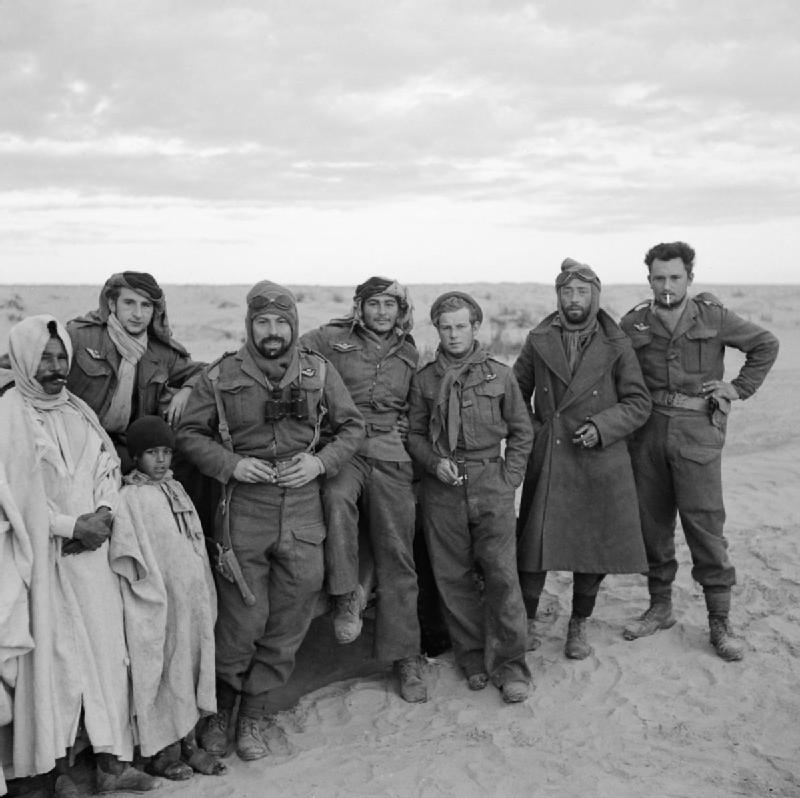
To understand this shift, we must look at those who first theorised it and proved it under fire. In 1941, in the North African desert, a handful of men invented a radically new way of waging war. They were neither stronger nor more numerous than the enemy; they were in fact laughably few. But they established an insight that would change the century's military doctrine: a very small unit, selected with rigour, trained to the extreme and free to act, can produce an effect out of all proportion to its size.
These men are regarded today as the founders of the modern special forces concept. Their idea was simple and dizzying. Rather than confronting a superior force head-on, they struck where they were not expected, destroyed dozens of aircraft on the ground, vanished, and did it again. Their strength lay not in power, but in preparation, boldness and the total trust placed in every team member in the field.
What makes their story decisive for business is precisely that they were not supermen. They were ordinary soldiers made extraordinary by method. Three principles explain their transformation, and those three principles have not aged a day.
First principle: a mission of absolute clarity
You do not ask people to surpass themselves “in general”. People surpass themselves for something precise, understandable and embodied. These desert pioneers knew exactly what they had to achieve, why it mattered and what depended on their success. The mission was not a slogan on a wall; it was the beating heart of every decision.
In business, the equivalent is crystal clear: a team that does not know precisely what it is for produces effort, not results. A leader's first responsibility is not to motivate, it is to clarify. A sharp mission turns scattered energy into directed power.
Second principle: command by intent
In the field, hundreds of kilometres from any headquarters, these units could not wait for orders. Their leaders therefore invented a way of commanding that did not dictate actions but conveyed intent: the result to be achieved and the deeper reason for achieving it. Everyone then knew what to do, even when the initial plan fell apart, because they had understood the why and could decide alone, in full coherence with the objective.
This principle now has a name: “command by intent”, which the French Army is now developing at the heart of its doctrine, draws directly on it. It rests on an idea as simple as it is demanding: a leader does not give detailed instructions, but a heading and a purpose, then trusts the teams to find the best path. In business, it is the most powerful remedy against the slowness, disengagement and paralysis of over-centralised organisations. A team that has understood the intent does not need to be told what to do at every moment: it acts fast, well, and in the right direction.
Third principle: trust and autonomy
Command by intent has value only if the organisation agrees to grant real trust. It is the most decisive lever, and the hardest: leaving each person the responsibility to decide, fast and well, without demanding constant validation. These units rested on a rare conviction: well-prepared men and women can be trusted to make the call at the right moment.
Many organisations demand initiative while making it impossible through constant control. You cannot demand the extraordinary and forbid autonomy; the one never comes without the other. Trusting is not a risk to be conceded: it is the very condition of performance.
Reveal your teams' potential
Our programmes transpose to your organisation methods proven in the most demanding environments.
Discover our training →Transpose, don't imitate
Business is not a battlefield, and this is not about playing soldiers or trying to toughen up employees. It is about transposing methods proven in the most demanding environments there are (where error is unforgiving) to a field where they remain strikingly relevant: collective performance, management and the lasting engagement of teams.
This is precisely the conviction on which ARXIBALD is founded. Bringing together professionals from the special forces and transposing their methods to the business world, through tailor-made training and corporate seminars, is not about selling thrills; it is about offering organisations a rigorous way to grow their teams. Our pedagogy rests entirely on this idea: performance is built, not decreed.
For the truth fits in one sentence: getting ordinary individuals to do extraordinary things is not a gift, it is a discipline. And a discipline can be learned.