Serious games: playing geopolitics to learn to decide together
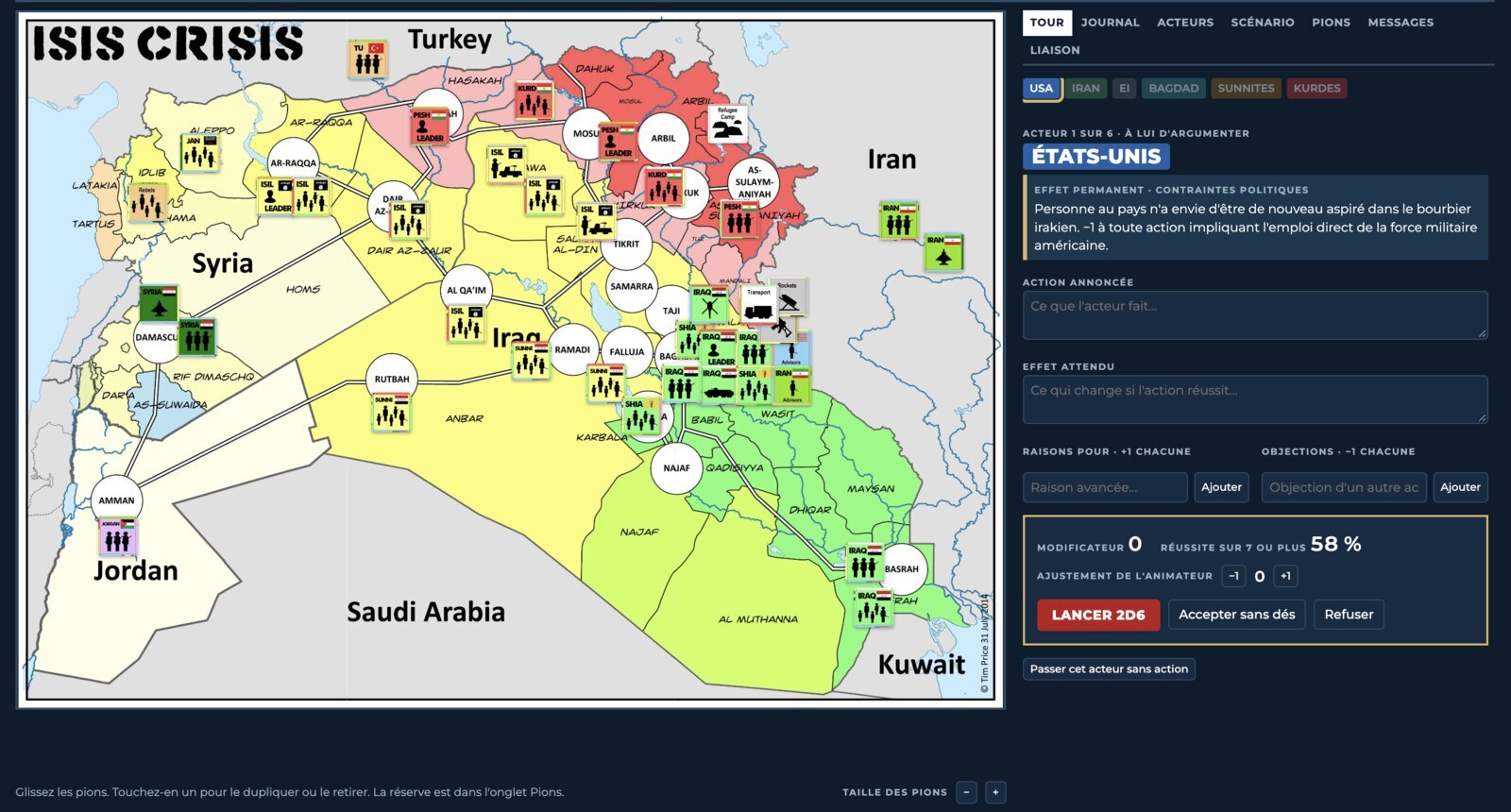
We remember little of what we hear, but we never forget what we have lived. That is the whole principle of the serious game: a game with a purpose that puts participants in command of a complex situation so they learn by deciding. At ARXIBALD, our serious games blend artificial intelligence, geopolitics and economic interests, to train teams to understand international dynamics and, above all, to decide together when nothing is certain.
Understand international dynamics by playing them
ARXIBALD offers a conference + serious game format: first we set out the major geopolitical and technological dynamics, then we bring them to life around the table to learn how to manage uncertainty.
Organise a session for your teams →Why a serious game
A conference passes on knowledge; a serious game makes you experience a situation. Participants don't watch a talk about collective decision-making: they decide, negotiate, form alliances, sometimes get it wrong, and own the consequences immediately. This learning by doing carves the reflexes far deeper than a slide deck, because it engages emotion, cooperation and each person's real responsibility.
Our serious games: AI, geopolitics and economic interests
Our simulations plunge teams into a world inspired by real international relations. Each table plays an actor, a state, an organisation, a company, with its own interests, resources and constraints. Artificial intelligence and new technologies are part of the game, as levers of power and sources of uncertainty, exactly as in the news. No one holds all the information, alliances form and break, and every decision shifts the overall balance.
What the game develops
Beneath the pleasure of play, the lessons are serious and transfer directly to the life of a team:
- Read international relations: understand how power, alliances and the balance of forces between actors are built.
- Factor in new technologies: gauge the role of AI and technological shifts as a strategic advantage as much as a source of risk.
- Reconcile individual and collective interests: cooperate for the common result without giving up your own objectives, the daily dilemma of any team.
- Manage uncertainty: decide fast and well with partial information, and adjust your strategy when the situation tips over.
How a session is run
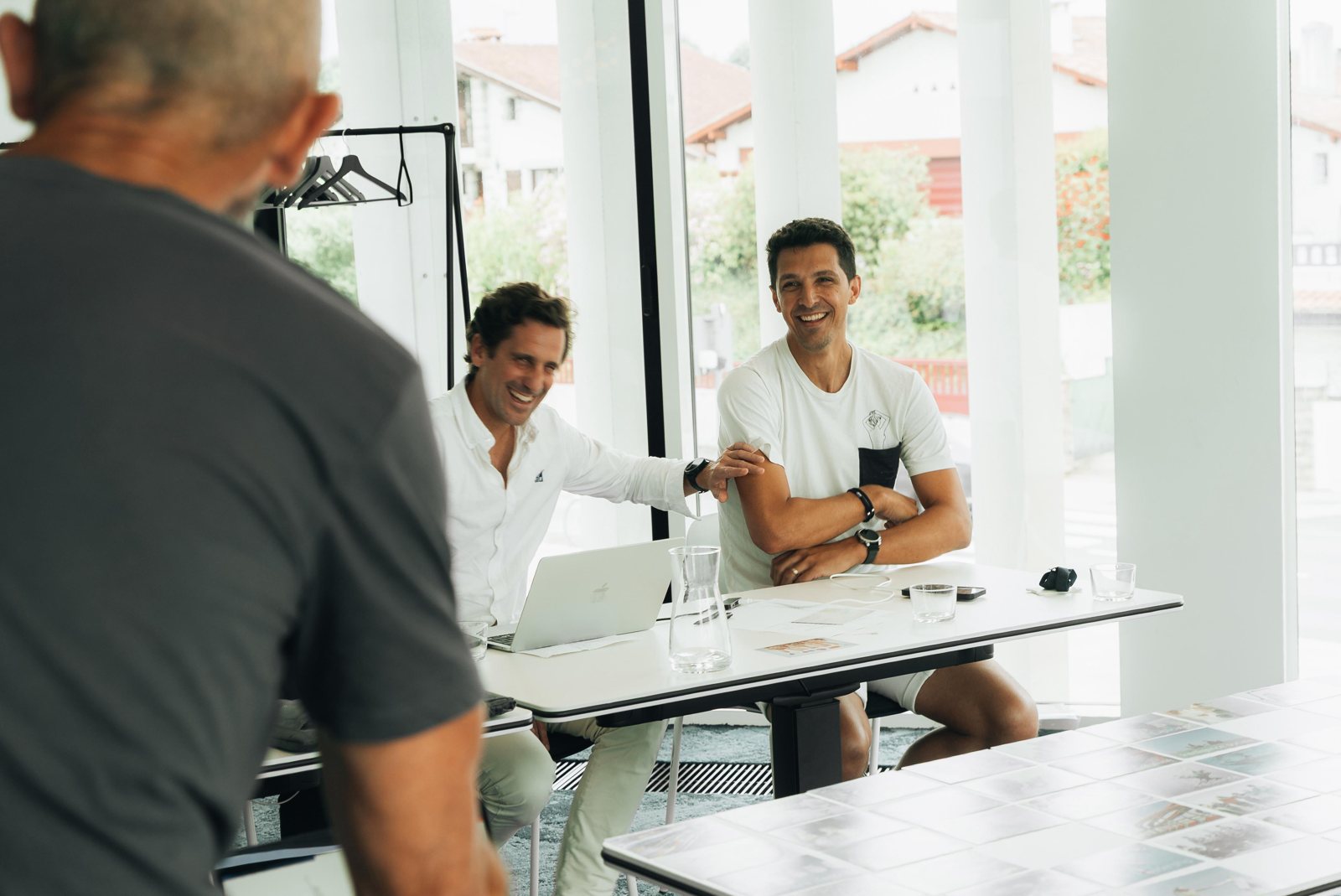
A session most often opens with a conference that sets the scene: the major international dynamics and the economic and technological stakes of the moment. Participants are then split into actor-teams, each with its own roadmap and interests. Then the game begins.
Round after round, each team announces its actions, argues for them, negotiates with the others and discovers the effects, sometimes settled by a dice roll that introduces the unexpected. A facilitator arbitrates, keeps things moving and maintains the right level of tension. The session always closes with a collective debrief: the key moments are replayed, what tipped the game is named, and every lesson is transposed to the real context of the team and the company.
In what settings to use them
The format adapts to the objective and the time available, for a single company or across companies:
- Leadership or cohesion seminar: unite a committee, a collective or a whole team around a memorable shared experience.
- Leadership and collective-decision training: work on cooperation, negotiation and arbitration under pressure.
- Onboarding a new team: speed up mutual understanding and build a common language.
- Company event: leave a mark in a short time, from a standalone conference to a half-day workshop, up to a longer immersion.
Want to get your teams playing?
Contact ARXIBALD to build the session suited to your context and your goals.
ARXIBALD is a Qualiopi-certified training organisation. Its conferences, serious games and training courses are designed to measure, for a single company or across companies.