Mann Gulch: the leadership lesson of a tragedy
Leadership is often the secret fear of not being up to the task the day everything goes wrong. Yet a story more than seventy-five years old, brought back to the surface by this summer's fires in the Gironde, says the opposite: what allows a team to hold together in the storm is almost never decided in the heroic instant. It is prepared long before, in calm times. And it is within reach of any leader who decides so.
Two forests, one same summer
This summer, the Gironde is burning as it had not since 1949. That same year, within a few days, another forest went up in flames seven thousand kilometres away, in Montana, at the bottom of a canyon called Mann Gulch. What happened there became one of the most studied stories among those who think about command. And it has a great deal to teach anyone who carries responsibility for an organization.
Mann Gulch, 5 August 1949
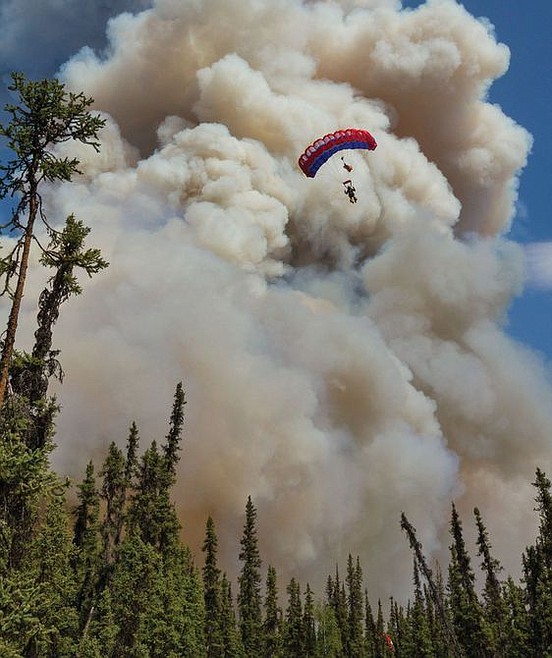
On 5 August 1949, at Mann Gulch, a fire breaks out. Fifteen smokejumpers, the famous parachute firefighters, drop onto the area to bring under control flames believed to be harmless. They are young, well trained, confident. But the wind rises, and the fire begins to race up the slope at a speed none of them had imagined. Once on the ground, Dodge quickly realizes that the fire has nothing to do with what had been announced and that every man present is in grave danger. He then gives two orders.
- Run for shelter and, to save every second, drop all their gear, too heavy and slowing the run: "Drop your tools!".
- Light a fire themselves, to set a backfire against the blaze devouring everything in its path.
In panic, the firefighters do not carry out these orders. Thirteen of them will die; only three will survive, including Dodge, who owes his life to the fire he lit himself and lay down in.
It is a paradox. The right idea existed. It came from a legitimate leader. It arrived at the right moment. But it was not followed.
The real tragedy is not the one you think
In 1993, the researcher Karl Weick analysed this tragedy and drew a conclusion that shakes our idea of command. What sealed the team's fate was neither a lack of courage nor a lack of skill. It was that, in a few minutes, two invisible things collapsed together: meaning and structure.
Meaning first. Dodge's orders made no sense to professional firefighters: fleeing the fire, letting go of your gear and lighting a fire yourself is the exact opposite of everything their craft has taught them. In the chaos and absolute urgency, without even the time to talk it over, they lost their bearings and could no longer interpret what was unfolding before their eyes. Structure next. This team had formed barely a few hours earlier; its members hardly knew one another, the bonds were thin. As soon as meaning slipped away, nothing was left solid enough to hold the group together. The collapse of meaning carried away the structure.
What Mann Gulch teaches those who must lead a collective
This story, however dark, holds a lesson for every leader. It teaches that leading is not being the hero who finds the solution alone at the worst moment. Dodge had found it, and that was not enough. The ability to get a decision accepted is built well in advance and cannot be decreed in the emergency. Trust, a shared language, a common reading of a situation: all of this is built beforehand, patiently, while nothing is yet burning. No one is born knowing it. It can be learned.
And Weick does not stop at the diagnosis; he shows what makes a team able to hold when the ground gives way.
- Improvisation, that freedom to invent with the means at hand, which Dodge embodied.
- Role redundancy, when each person can hold another's position and no vital function rests on a single individual.
- The attitude of wisdom, acting with conviction while doubting one's certainties, so as never to confuse yesterday with today.
- Respectful interaction: that bond of honesty and trust which keeps a shared understanding alive as the pressure rises.
None of these four supports is a gift reserved for a few. They are skills, and a skill can be prepared and passed on: it is the very foundation of our methodology.
So, before wondering whether you will be able to decide when the day comes and everything tips over, ask yourself the two questions that truly matter. What makes sense, today, in the team I lead? And does that meaning strengthen the structure, or quietly weaken it without my seeing it? Because the day the wind turns, your teams will not follow your orders first: they will follow the meaning you have built with them. And that meaning is being built now. That is your responsibility as a leader.
Develop your teams' key skills
Our corporate seminars develop the key skills within your organization while building the mutual trust that keeps it together: decision-making under pressure, a shared language and common understanding, delivered by professionals from the Special Forces.
Discover our corporate seminars →