What the GIGN Taught Me: Ghislain Réty's leadership lessons

A GIGN commander rarely tells his own story. General Ghislain Réty, who joined the elite unit as a young officer in 1996 and led it from August 2020 to October 2025, did just that in Ce que le GIGN m'a appris ("What the GIGN Taught Me", Albin Michel). The book is neither an account of operations nor a management manual: it is a reflection on leadership, the kind forged under extreme demands. And what he draws from it speaks directly to executives.
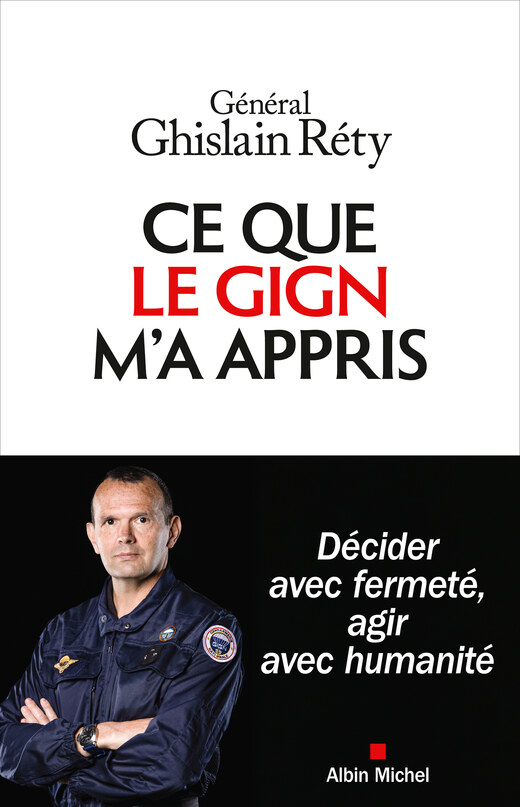
A leader shaped by demanding standards
Thirty-one years in the gendarmerie, with the GIGN as a red thread: young officer, mission chief, operations chief, then commander of the unit. During his first period there, Ghislain Réty directed more than 150 of the most sensitive operations. This path is no anecdote: it shapes a view of command where authority comes not from rank, but from competence, exemplarity and the trust placed in one's teams. That is the view the book puts into words. Having left GIGN command in 2025, he is now director of security at Air France.
Doubt as a method
Against the image of the leader who never trembles, Ghislain Réty makes doubt a virtue. To doubt is not to hesitate: it is to refuse easy certainty, to listen to opposing views, to consider what might go wrong. Doubt feeds preparation and clarity; it guards against blind spots. In business as in operations, the most dangerous decisions are often those taken without having doubted. The mature executive is not the one who knows everything: it is the one who knows what they do not know, and surrounds themselves accordingly.
Deciding in a crisis
Crisis management is the heart of the job. Yet the quality of a response is not decided on the day of the crisis, but long before: in training, preparation, clarity of intent and trust built over time. When everything accelerates, the leader does not improvise an organisation: they rely on the one they have patiently forged. Deciding quickly and well, under pressure, means having worked on your composure and given everyone the means to act at their level. The crisis does not create the leader: it reveals the work done beforehand.
Values that hold commitment together
Ghislain Réty insists on what holds a collective together when the test comes: values that are lived, not displayed. Commitment cannot be decreed; it grows from trust, respect, shared meaning and the exemplarity of the leader. In an elite unit as in a company, lasting performance rests on this foundation: you cannot ask a team to go beyond its limits if it does not know why, or for whom. Leadership, in the end, is as much about deserving that commitment as obtaining it.
Listen, arbitrate, dare
The book sums up the art of command in three acts: listen, arbitrate, dare. Listen in order to understand before deciding; arbitrate because to govern is to choose, often between two imperfect options; dare because inaction has a cost, and a leader always ends up having to put their responsibility on the line. These three verbs, true at the GIGN, are just as true in the boardroom.
What the GIGN teaches business
One might think the world of the special forces has nothing to do with business. The opposite is true: in a more uncertain, faster and more exposed world, executives have much to learn from these units. The quality of preparation, clear-sightedness in the face of risk, the alignment of teams around a clear intent, a culture of debriefing and the strength of the collective: all principles that Ghislain Réty's book makes concrete, and that ARXIBALD transposes to the daily reality of executives.
Preparing your executives for decision and crisis
This is exactly what ARXIBALD develops. We prepare your executives for decision-making under pressure, leadership and resilience, in training and seminars delivered by professionals from the special forces.
Build your programme →